
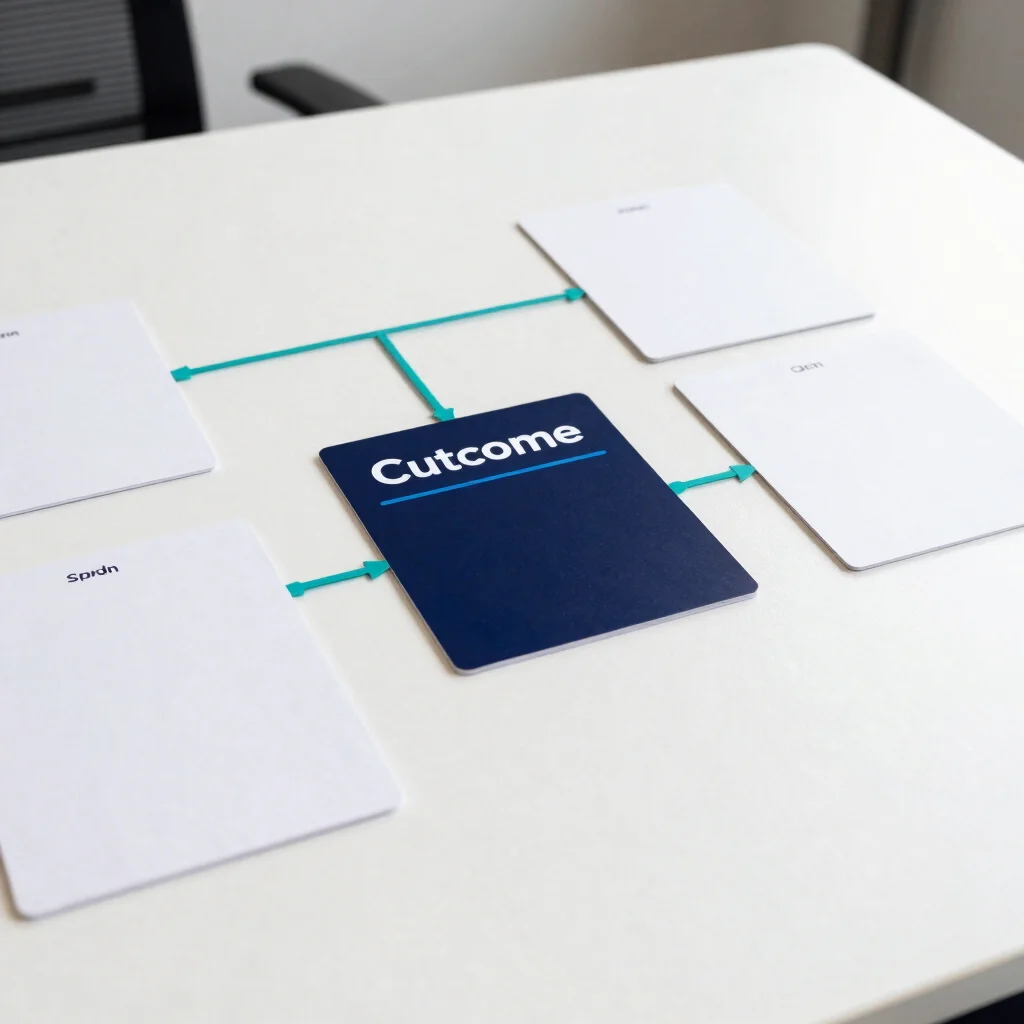
A familiar sprint-planning scene: the team reads tickets aloud, estimates each one, and runs out of time before agreeing what the sprint is meant to achieve. The plan may look busy, but people are left to make their own calls when priorities compete. A clear outcome gives the work a shared direction.
Name the change first
Before discussing tasks, describe what should be different for a user or stakeholder by the end of the sprint. For example, a team working on an appointment service might aim to let users reschedule without contacting support. That outcome is more useful than a goal such as “finish the booking tickets”, because it explains why the work matters.
Keep the outcome small enough to guide decisions over the sprint, but not so prescriptive that it dictates every step. The team can then ask whether a proposed task contributes to the change, supports quality, or is essential for delivery. If it does none of those things, it may not belong in this sprint.
Plan with the people doing the work
The Product Owner brings context about user needs and backlog priorities; the delivery team works out what is feasible and how to approach it. Rather than assigning every ticket in advance, discuss the work, its dependencies and any assumptions that need checking. This makes the plan a working agreement, not a set of promises made without the team.
A useful question is, “What could stop us reaching this outcome?” The answer might be an unclear acceptance criterion, a design decision or a dependency on another team. Surface those risks while there is still time to clarify them, and keep the sprint plan visible enough for everyone to revisit.
Leave room to adapt
A sprint plan is a forecast based on what the team knows at the time, not a reason to ignore new information. If a task proves larger than expected, return to the outcome and decide together what can change while preserving the most important value. Avoid quietly adding work until the original plan becomes impossible to understand.
To improve your next planning session, write one plain-English outcome at the top of the board before reviewing tickets. At the end, check that each selected item supports it and that the team can explain the first step. That small habit turns sprint planning from ticket administration into a conversation about useful work.

